Living with achalasia or gastroparesis can be frustrating and seriously affect your quality of life. These conditions make eating and digestion difficult, often leading to discomfort, poor nutrition, and daily challenges.
Dr. Steve Siegal, a board-certified, fellowship-trained surgeon in Fort Myers, provides advanced, effective treatments using the latest minimally invasive and endoscopic techniques to help you feel better and live more comfortably.
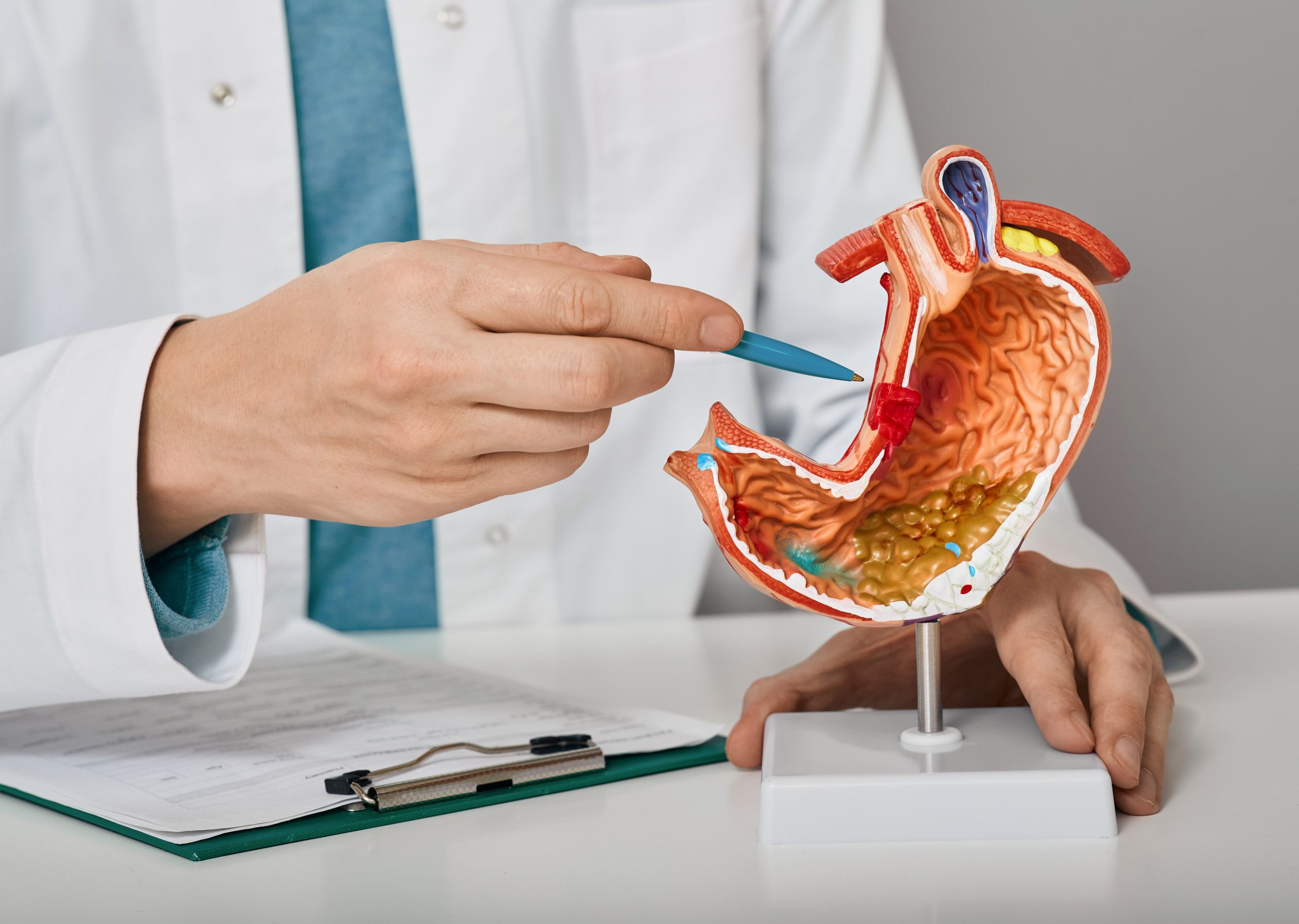

Achalasia is a rare swallowing disorder where the muscle at the bottom of your esophagus (the lower esophageal sphincter, or LES) doesn’t relax properly. This causes food and liquids to get stuck in the esophagus instead of passing into the stomach.
Achalasia worsens over time and doesn’t go away on its own. Effective treatment is essential to restore normal swallowing and prevent complications.
Dr. Siegal offers several advanced options for treating achalasia, tailored to each patient’s condition and needs:
Surgical Release of the Lower Esophageal Sphincter
Heller myotomy is a minimally invasive surgical procedure that cuts the tight muscle fibers of the LES, allowing food to pass into the stomach more easily.
Incisionless Endoscopic Relief for Achalasia
POEM is a cutting-edge, incisionless procedure that uses a flexible endoscope passed through the mouth to access and release the tight muscle fibers of the LES from inside the esophageal wall.
Dr. Siegal is experienced in both Heller myotomy and POEM, giving you access to the best treatment for your specific type of achalasia.
Gastroparesis is a condition where the stomach muscles don’t work properly, causing delayed emptying of food into the small intestine. Unlike an obstruction, the pathway is open — but the muscles are too weak or uncoordinated to move food efficiently.
Gastroparesis can be caused by diabetes, prior surgery, or certain medications, or it may have no clear cause (idiopathic).

Treatment focuses on relieving symptoms, improving stomach emptying, and maintaining proper nutrition. Dr. Siegal provides personalized options, which may include:
Non-Surgical Relief for Early-Stage Gastroparesis
For many patients, the first step in managing gastroparesis involves conservative measures like dietary modifications and medications. These strategies aim to reduce symptoms and improve gastric motility while supporting proper nutrition and digestion.
Implantable Device to Improve Stomach Function
When dietary changes and medication aren’t enough, a gastric pacemaker may be the next step. Enterra Therapy uses a small, implantable device to deliver gentle electrical pulses to the stomach muscles, helping regulate contractions and reduce symptoms like nausea and vomiting.

Surgical Widening of the Stomach Outlet
Pyloroplasty is a minimally invasive surgery that widens the pylorus — the valve between the stomach and small intestine — to help food empty more easily. It is often combined with other procedures when needed, such as hiatal hernia repair.

Incisionless, Advanced Endoscopic Therapy
G-POEM (Gastric Peroral Endoscopic Myotomy) is a state-of-the-art, incisionless procedure that treats gastroparesis by cutting the pyloric muscle using a flexible endoscope. This allows the stomach to empty more efficiently, offering relief to patients with persistent symptoms.

If you’re struggling with swallowing problems or delayed stomach emptying, Dr. Steve Siegal is here to help with advanced, proven treatments and personalized care.
📞 Contact our Fort Myers office today to schedule your private consultation and start feeling better soon.
